How to Build a Scalable Data Infrastructure for Startups and SMEs in 2026
If you are running a startup or SME, your data infrastructure determines how fast you grow. Not your logo. Not your website. Not even your product alone. Your ability to collect, store, clean, and use data correctly decides how well you make decisions.
If you are running a startup or SME, your data infrastructure determines how fast you grow. Not your logo. Not your website. Not even your product alone. Your ability to collect, store, clean, and use data correctly decides how well you make decisions.

Godwin Yusuf
Godwin Yusuf
Co-founder
Co-founder
Tools
If you are running a startup or SME, your data infrastructure determines how fast you grow. Not your logo. Not your website. Not even your product alone. Your ability to collect, store, clean, and use data correctly decides how well you make decisions.
Most early-stage companies delay building a proper data platform because it feels technical and expensive. So they rely on spreadsheets, disconnected tools, and manual reporting. That works at the beginning. But once revenue grows, the cracks start to show. Reports conflict. Customer data lives in five places. No one trusts the numbers.
This guide will walk you through how to build a scalable data infrastructure without overcomplicating it.
Step 1: Identify Your Core Business Goal
Before you choose any tools, define your primary goal for the next 6 to 12 months.
Examples:
Increase customer retention by 15 percent
Reduce customer acquisition cost
Improve revenue forecasting accuracy
Increase operational efficiency
Your data infrastructure must support this goal. If it does not, you are building noise.
Step 2: Map Where Your Data Lives
Most SMEs have data scattered across:
CRM systems
Payment processors
Marketing platforms
Customer support tools
Spreadsheets
Create a simple document that answers:
Where does customer data enter?
Where is revenue tracked?
Where do operational metrics live?
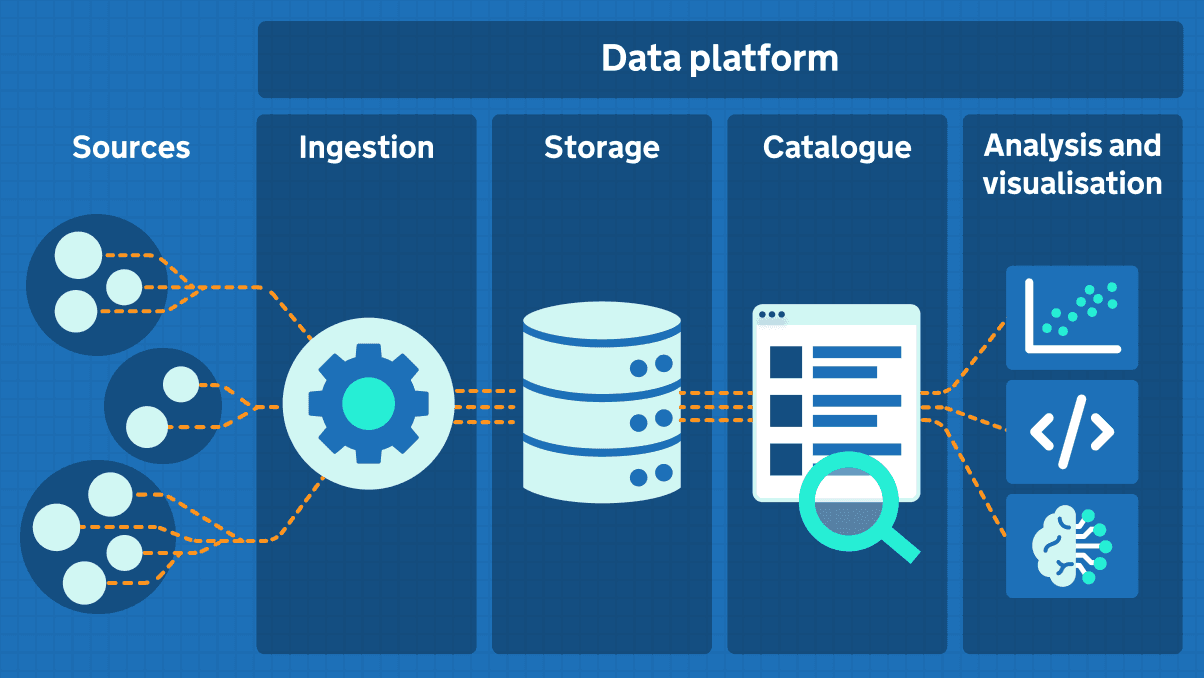
This becomes your data flow map. Even drawing it on paper is powerful.
Step 3: Establish a Single Source of Truth
One of the biggest data problems in startups is conflicting numbers. Marketing says revenue is X. Finance says it is Y.
You fix this by creating a single source of truth. This usually means:
A central database or data warehouse
Automated data pipelines
Standard definitions for metrics
You do not need enterprise-level complexity. You need consistency.
Step 4: Automate Reporting
Manual reporting wastes time and introduces errors. If someone builds the same report every week, it should be automated.
Focus on:
Sales performance dashboards
Retention tracking
Revenue analytics
Operational KPIs
Automation saves time and improves accuracy. Many SMEs recover 20 to 40 hours per month just by automating reports.
Step 5: Monitor and Optimize
Data infrastructure is not a one-time project. It requires monitoring.
Track:
Data accuracy
System performance
Cost efficiency
Data security
If your cloud bill increases every month without clear growth, something is wrong.
Scalable data systems are not about complexity. They are about clarity. When your data infrastructure supports your business goal, growth becomes measurable and predictable.
Start simple. Build intentionally. Scale gradually.
If you are running a startup or SME, your data infrastructure determines how fast you grow. Not your logo. Not your website. Not even your product alone. Your ability to collect, store, clean, and use data correctly decides how well you make decisions.
Most early-stage companies delay building a proper data platform because it feels technical and expensive. So they rely on spreadsheets, disconnected tools, and manual reporting. That works at the beginning. But once revenue grows, the cracks start to show. Reports conflict. Customer data lives in five places. No one trusts the numbers.
This guide will walk you through how to build a scalable data infrastructure without overcomplicating it.
Step 1: Identify Your Core Business Goal
Before you choose any tools, define your primary goal for the next 6 to 12 months.
Examples:
Increase customer retention by 15 percent
Reduce customer acquisition cost
Improve revenue forecasting accuracy
Increase operational efficiency
Your data infrastructure must support this goal. If it does not, you are building noise.
Step 2: Map Where Your Data Lives
Most SMEs have data scattered across:
CRM systems
Payment processors
Marketing platforms
Customer support tools
Spreadsheets
Create a simple document that answers:
Where does customer data enter?
Where is revenue tracked?
Where do operational metrics live?
This becomes your data flow map. Even drawing it on paper is powerful.
Step 3: Establish a Single Source of Truth
One of the biggest data problems in startups is conflicting numbers. Marketing says revenue is X. Finance says it is Y.
You fix this by creating a single source of truth. This usually means:
A central database or data warehouse
Automated data pipelines
Standard definitions for metrics
You do not need enterprise-level complexity. You need consistency.
Step 4: Automate Reporting
Manual reporting wastes time and introduces errors. If someone builds the same report every week, it should be automated.
Focus on:
Sales performance dashboards
Retention tracking
Revenue analytics
Operational KPIs
Automation saves time and improves accuracy. Many SMEs recover 20 to 40 hours per month just by automating reports.
Step 5: Monitor and Optimize
Data infrastructure is not a one-time project. It requires monitoring.
Track:
Data accuracy
System performance
Cost efficiency
Data security
If your cloud bill increases every month without clear growth, something is wrong.
Scalable data systems are not about complexity. They are about clarity. When your data infrastructure supports your business goal, growth becomes measurable and predictable.
Start simple. Build intentionally. Scale gradually.